Farming asks more every year. Your records should give something back.
Allele turns the records you already keep into a companion that works alongside you: it works out lambing dates, says when lambs are due for weaning, and turns weigh-ins into growth curves.

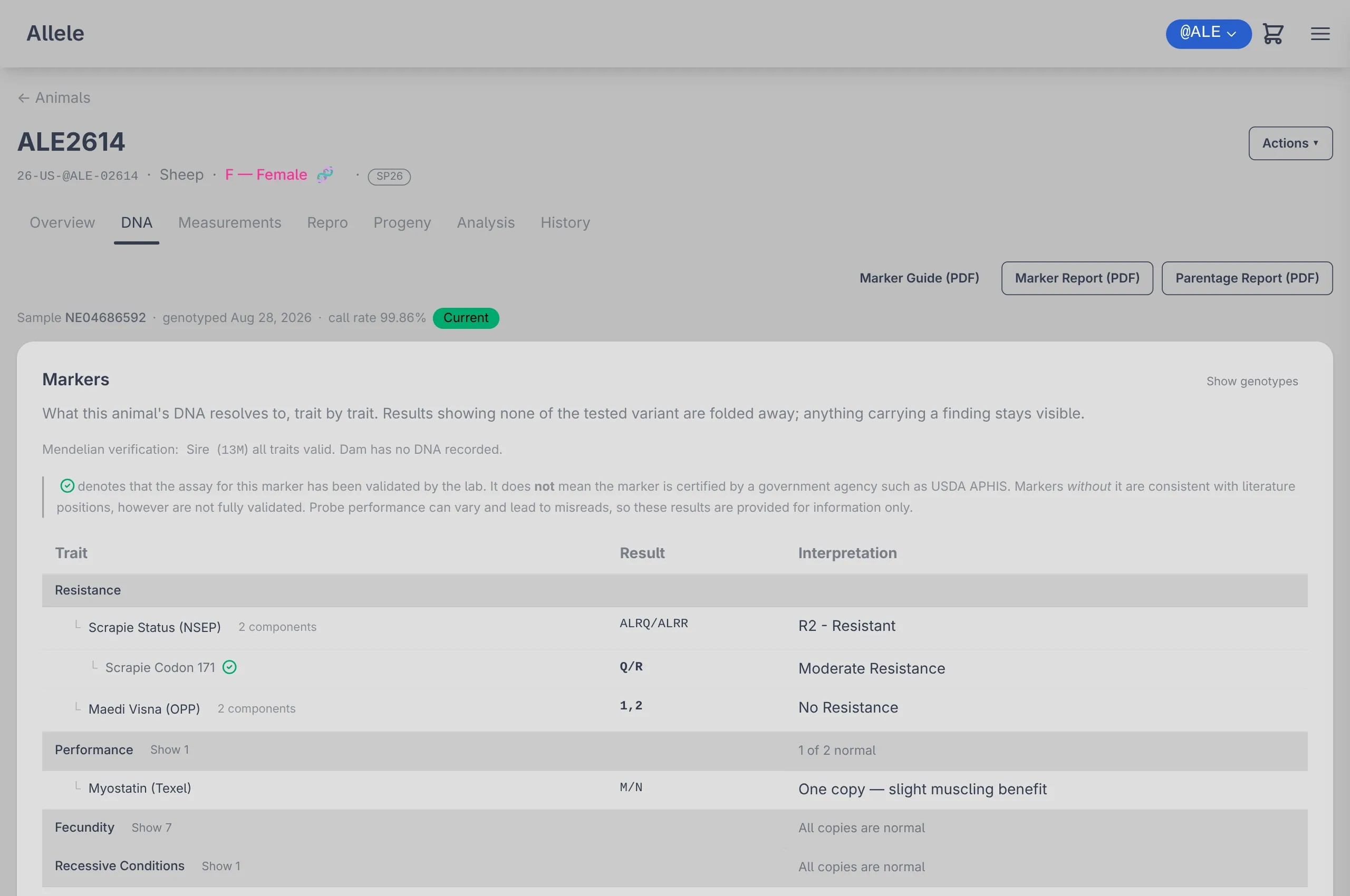
Genotyping: one sample for parentage and trait markers, filed on the animal.

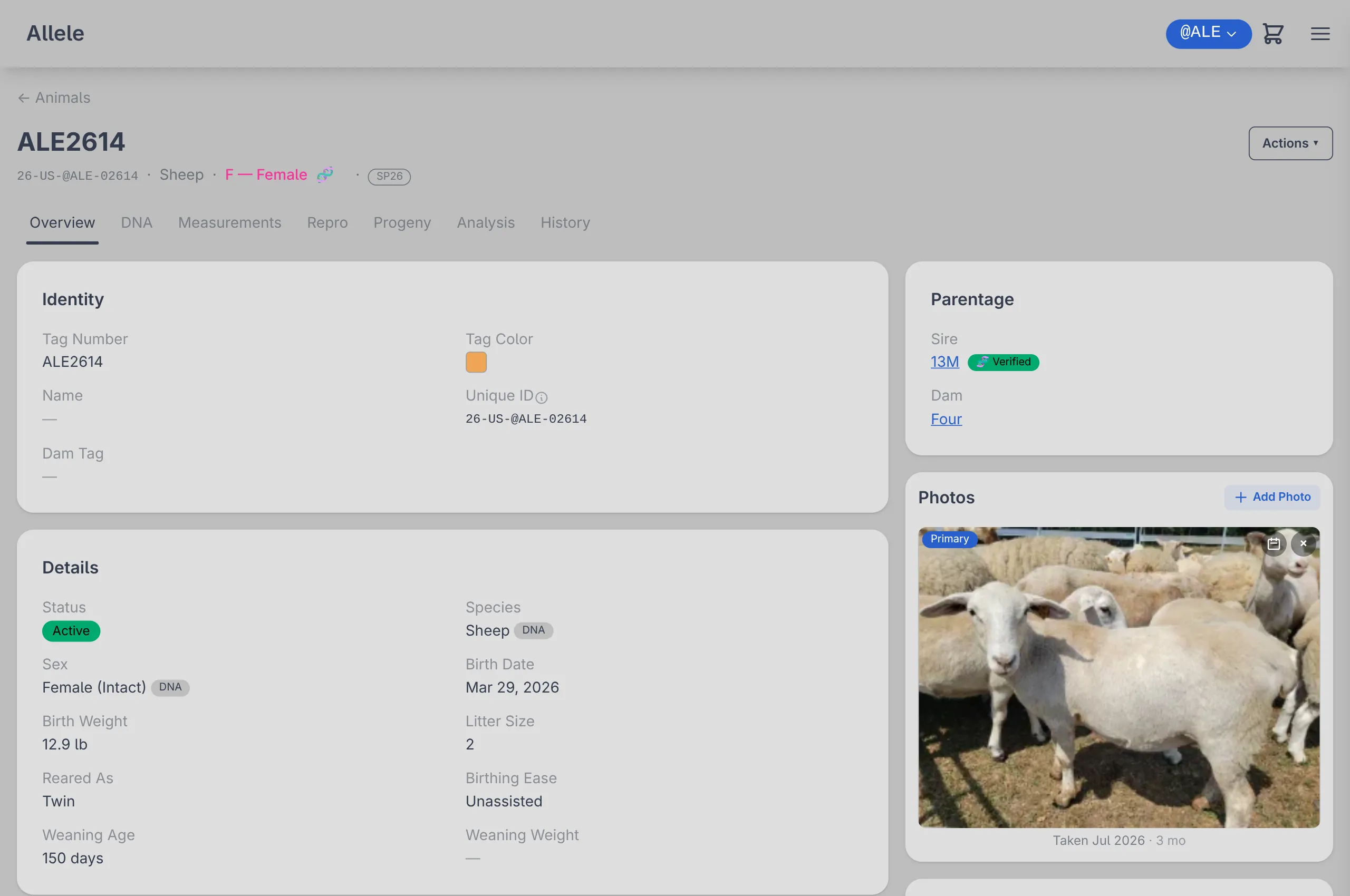

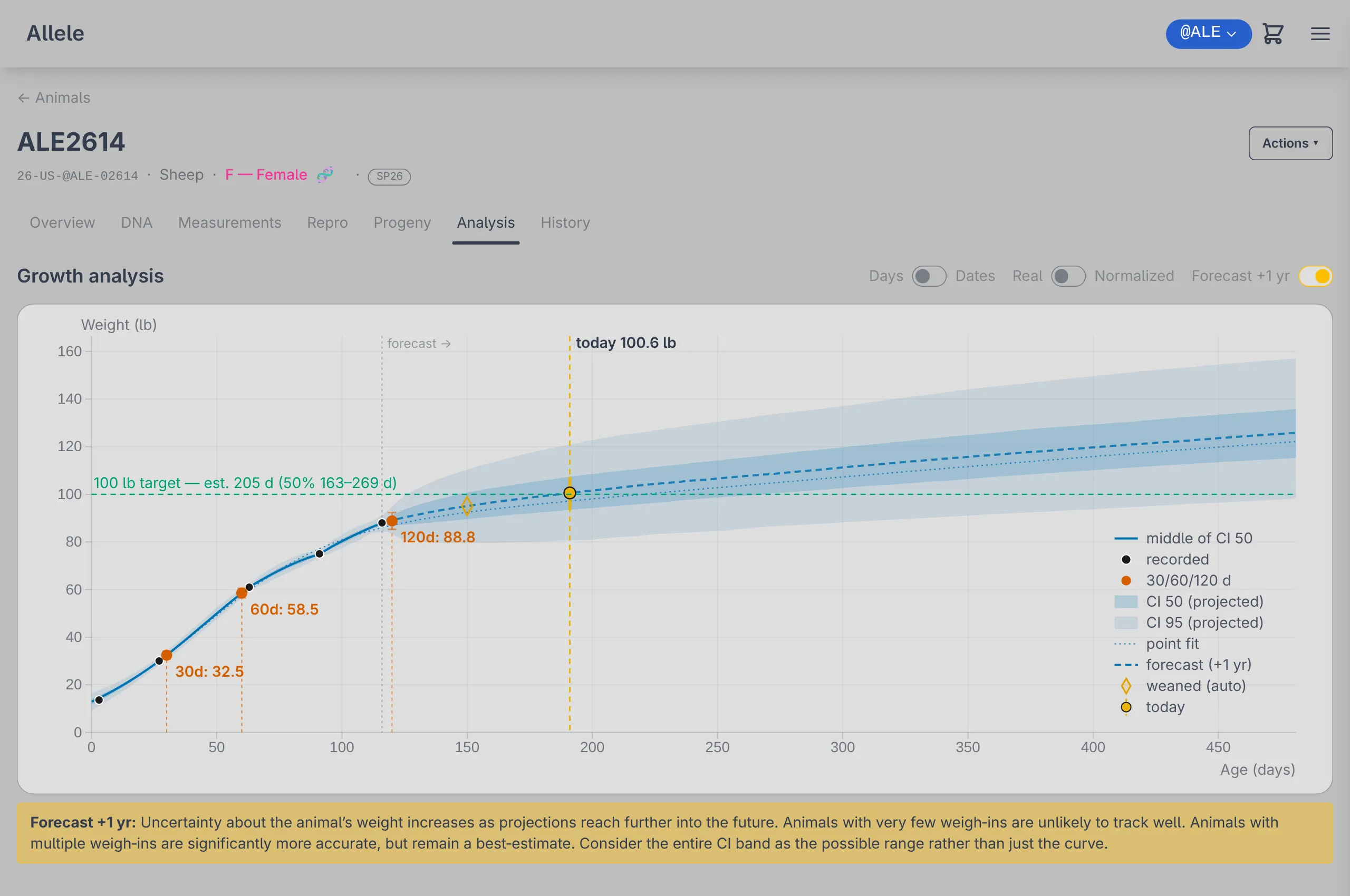
Three products. One record per animal.
Each one works on its own. Together they share one record per animal, so a DNA result, a weigh-in and a lambing all land in the same place, and the analytics read them all.
Genotyping
One sample confirms sire and dam and reports scrapie and other trait markers.
Results land on the animal's record.
More about Genotyping ↓Records
Animals, lambings, weights, mobs and notes, kept on the farm. Free.
Every record feeds something back.
More about Records ↓Analytics
Growth curves, forecasts and each ewe's lambing record, built from the other two.
Breeding values and flock rankings come with membership.
More about Analytics ↓Your notes, brought to life.
A notebook keeps what you wrote and waits for you to come back to it. Allele reads what you record and answers back.
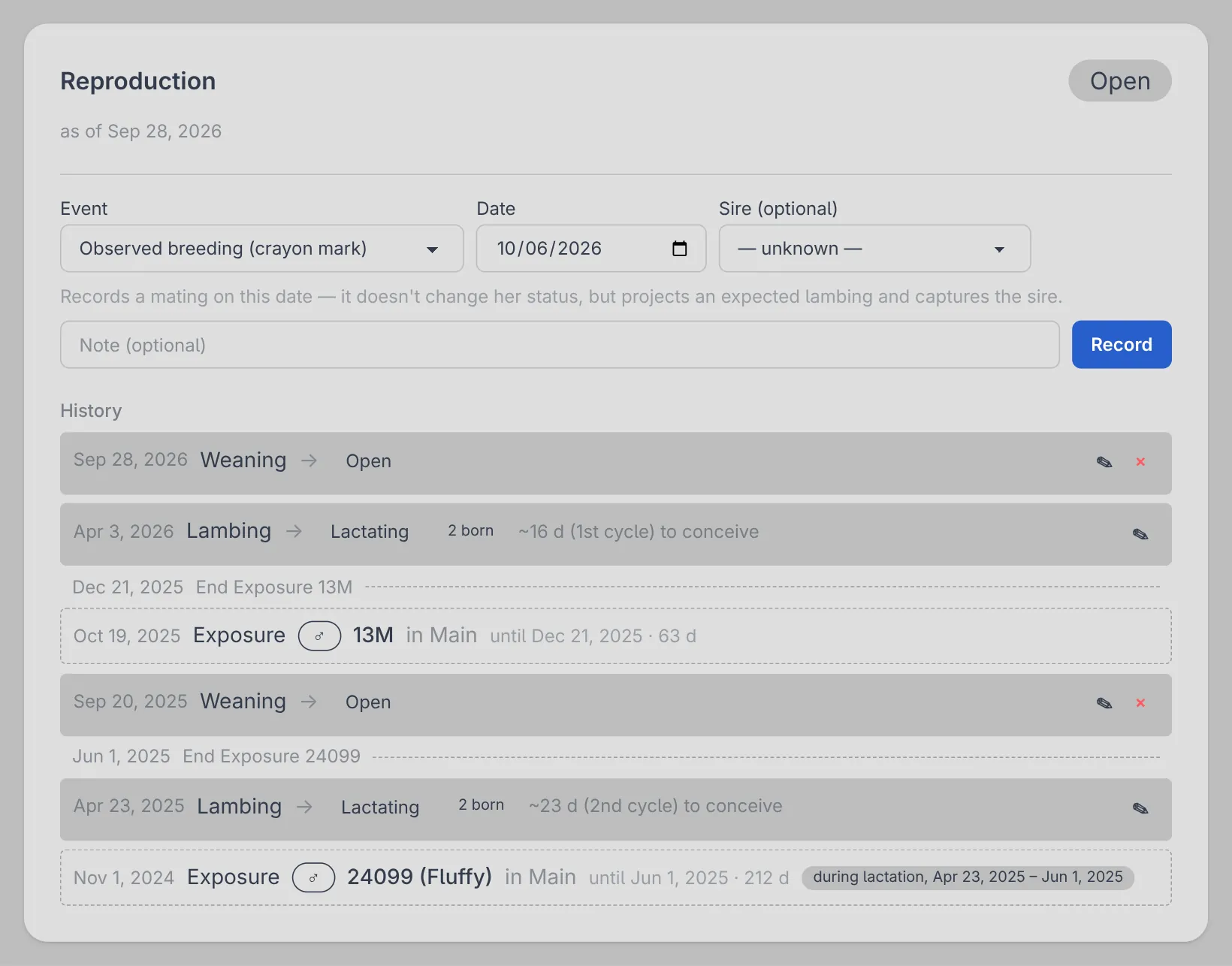
Mark a ewe with the crayon and her record works out when she should lamb. When her lambs arrive, it lists the rams she was penned with as possible sires. When they're due for weaning, it says so, and one click records it. Weigh a lamb and its growth curve draws itself. A weight that doesn't fit is flagged and left out of the curve.
You keep the records. They keep working for you.
When will she lamb?
Record a mating and her expected lambing date is worked out for you.
Who could have sired him?
The rams she was penned with in the right window, listed on the lambing.
Weaning due
A ewe past weaning age is flagged on her record, with a one-click Mark weaned.
That weight looks wrong
A weigh-in that doesn't fit the animal's growth is flagged and left out of its curve.
Don't forget
Turn a note into an action and it stays open until you tick it off.
Ask your records
Ask a question or describe a change by voice, and approve it before it's saved. A membership feature.

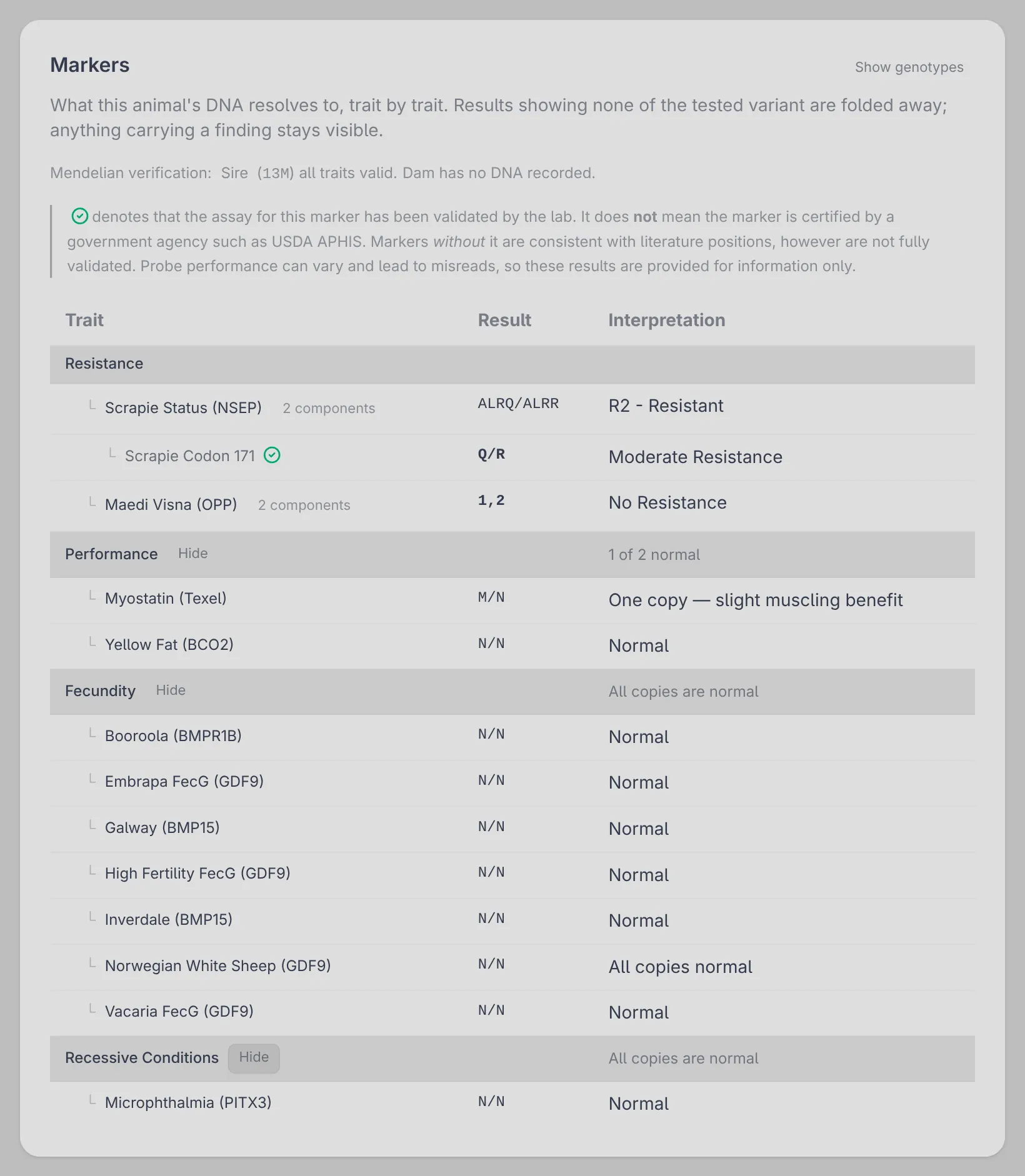
One sample, $20. Six answers on the record.
Send one Allflex TSU tissue sample per sheep. We ship samples to the lab in batches, and results come back 4–5 weeks after your batch ships.
Every answer lands on that animal's record, not in an email you have to file. The sire shows as DNA-verified, the scrapie genotype sits next to her weights, and both reports are there to download the day a buyer asks.
Sire and dam
Confirmed or excluded from DNA. A conflict opens a case you can follow from your inbox.
Scrapie
Codons 136, 154 and 171, with the genotype type, on the record and in the marker report.
OPP
TMEM154 E35K and N70I markers for ovine progressive pneumonia.
Muscling and fecundity
Myostatin (Texel), Booroola, Inverdale, Galway and GDF9 variants.
Sex check and more
A DNA sex check, plus yellow fat and microphthalmia.
A certificate to hand over
A parentage certificate PDF, with genomic inbreeding, for the buyer who asks.
Type it in once. Get something back.
Most record keeping is a one-way street: you write it down and it sits there. On Allele, the records you already keep come back as answers, and none of it costs a thing.

Weigh-ins → a growth curve
A few weights on a lamb draw its curve and estimate where its weight is headed.
Feed records → a keeping cost
Hay, salt and supplements turned into an estimate of what the flock costs to keep.
A lambing → the lamb records
Record the lambing once and the lambs are created with their dam already filled in.
One mob note → every animal
Write it once to the mob and it lands on each animal in it.
Your crew, your rules
Invite the people who work your flock and choose what each of them can do.
Every edit → an undo
Each change is kept in the animal's history, and a slip can be undone.

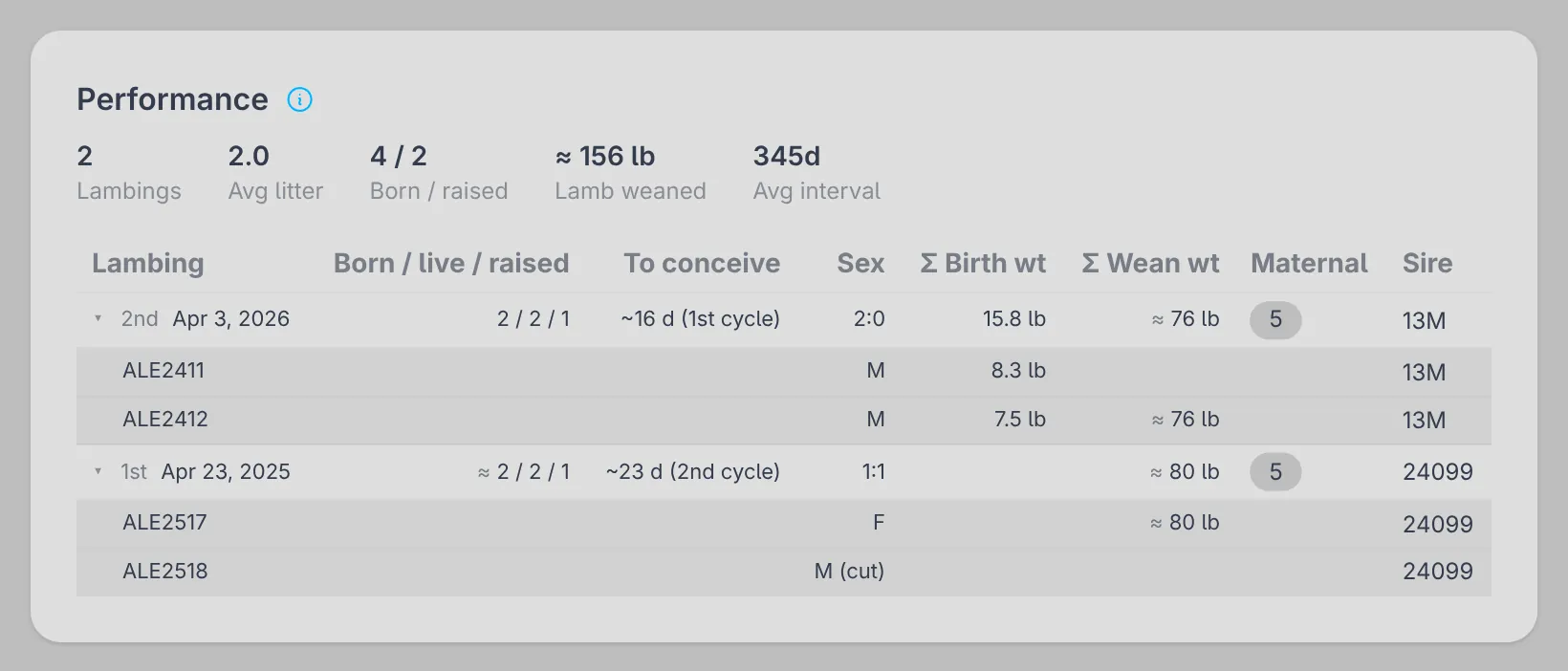
Every ewe, every year. Even the empty ones.
Record a lambing once and Allele builds her record: how many she had, how many she raised, and the weight of lamb she weaned. Every year of her working life gets its own row, so a year she didn't lamb shows up as "No birth recorded" instead of quietly disappearing.
A lamb counts as raised when it lives to weaning, or to 90 days, whichever comes first. Foster a lamb onto another ewe and it counts for the ewe that reared it. When it's time to decide who stays, the answer is on her record, not in your memory.
Born and raised
Lambs she gave birth to, and how many of them lived to weaning.
Lamb weaned
The weight of lamb she reared to weaning, added up across her lambings.
Lambing interval
Her average number of days between lambings.
Empty years
A "No birth recorded" row for every year of her working life without a lambing.
Sire of each crop
The ram behind each year's lambs, confirmed by a DNA test when the mob had more than one.
Growth curves
Every lamb's weigh-ins drawn as a curve, with a forecast of its mature weight. Free for every animal.
With membership
- EBVs. Estimated breeding values: a ranking of what an animal is likely to pass on, built from the weights, lambings and DNA you already record.
- Flock-wide analytics. Rank and compare your animals across the whole flock.
- Voice. Talk to your records: ask a question or describe a change, and approve it before it's saved.
New features start as a free public beta. When they graduate, they become part of membership.
Problems you'll stop having.
Weights in a notebook that never get used.
Every weigh-in draws the lamb's growth curve and forecasts where it's headed.
Two rams in with the ewes and no idea who sired what.
One DNA sample confirms or rules out the sire, on the lamb's record.
Lambing notes on the back of a feed bag.
Record the lambing once. The lambs exist, matched to their dam.
A scrapie genotype on a paper certificate somewhere.
Scrapie results sit on the animal's record, with a report to send a buyer.
A ewe that skipped a year and nobody noticed.
Her record shows "No birth recorded" for that year.
Forgetting which lambs are due for weaning.
Her record flags weaning due, and one click records it.
Record keeping is free. DNA by the test.
Free.
For now.
Every feature costs nothing for now, membership features included. DNA tests are always paid, per test.
Always free
- Record keeping Animals, lambings, weights, mobs and notes.
- Single-animal analytics Growth curves and forecasts for every animal.
Per test
- DNA test: $20 per animal Parentage, scrapie and trait markers, and a sex check.
Membership
- EBVs Rankings of what each animal is likely to pass on.
- Flock-wide analytics Compare animals across the whole flock.
- Voice Talk to your records.
New features start as a free public beta. When they graduate, they become part of membership.
Start with the flock you have.
Add your animals, record a weigh-in, and see what comes back. Order DNA tests whenever you're ready.
Questions, answered.
Which animals does it cover?
Record keeping works for sheep and goats. The DNA test and the analytics are built for sheep today.
What's free, and what will membership cost?
Record keeping and single-animal analytics are free. DNA tests are always paid, per test. Membership pricing isn't set yet, and every feature is free for now.
New features start as a free public beta. When they graduate, they become part of membership.
How do I send samples?
Right now we take Allflex TSU tissue samples, one tube per animal. There are no kits to buy: use your own Allflex TSU tubes and order the test online.
How long do results take?
We hold samples until a batch fills, then ship them to the lab. Results come back 4–5 weeks after your batch ships. If you can't wait for a batch, you can pay to ship sooner; the lab's 4–5 weeks stays the same.
Do I need to DNA test to use the records?
No. Record keeping is free and works without any DNA. Test the animals you want answers on, when you want them.
Who can see my animals and results?
Other signed-in users can see an animal's public view: its tag, name, ID, pedigree, progeny and photos, with your farm's name as breeder or owner. DNA results, weights, lambing records and reports stay yours alone.
The Terms and Privacy Policy cover the details.